
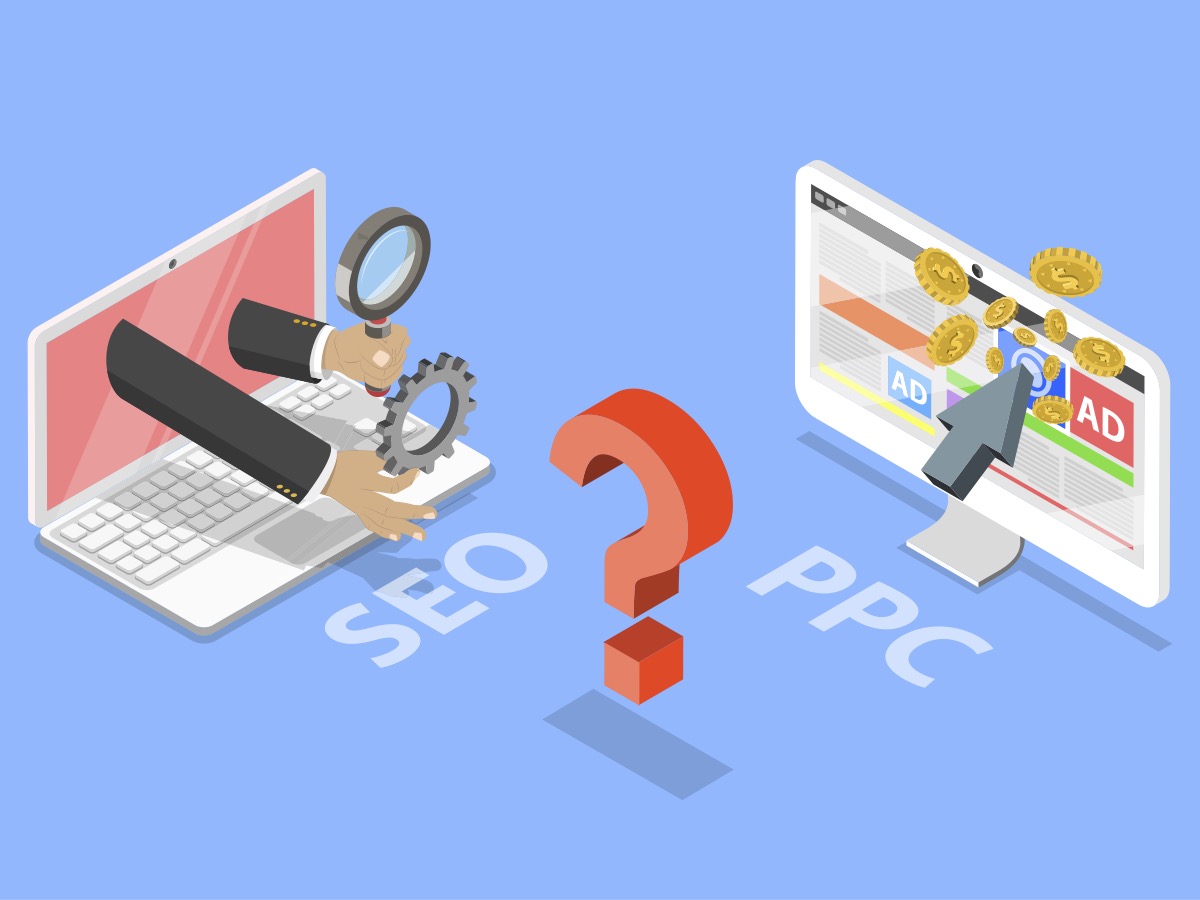
Many of you will know there are two leading methods within marketing – organic and paid. Each method often works towards the same goal, but using very different strategies. We often recommend that a combined effort of the two will get you the best results. We’re able to learn new things about the customers and how best to reach them from each method.
For those who don’t know, SEO is short for Search Engine Optimisation. It refers to the process of improving the quality and quantity of website traffic to a website or a specific web page from search engines. PPC refers to Pay-Per-Click, an online marketing technique in which you are charged every time someone clicks on your advert.
How SEO supports PPC
Long-term brand awareness
Brand awareness takes a while to build up and to make an impact with organic searches. This means that organic search is not often the best place to promote something for a short period of time. Across your organic platforms, you should be building up a strong brand foundation with your name or logo, values, and the services you offer. Over a longer period of time, this allows you to build up a unique brand awareness that makes you more recognisable across organic searches and social media platforms.
High-quality SEO page
What will help you to achieve a good quality score within a PPC campaign is an SEO page with high quality content. We recommend using the same rules for your landing pages. Be sure to include content that is relevant, keyword rich without overdoing it, and make sure you are always leading the reader towards a CTA.
Local SEO can support your ads with reviews
Essentially, ad extensions enable your ads to display more information. One of the most valuable is reviews. Reviews support your business with positive social proof as people will already have some trust in you / your business before even getting in touch. Reviews can be built up by linking to your Google My Business profile. This is an integral part of a local SEO campaign, to your ads.
How PPC can help SEO
Quick results from high-performing meta-descriptions
Within SEO, meta-descriptions should be targeted towards users in order to gain clicks. It can be a long process to test these, as there’s no way to perform a split test on it. PPC allows you to use two descriptions with the same targeting to find which description is the most effective. This therefore speeds up the process and is much easier to assess which works best.
Remarket to organic leads
Customer journeys include many touchpoints. When a customer has come to your site organically but doesn’t actually get in touch, you can add them to a remarketing list. This will invite them back onto your site and encourage them to reach out to you.
Short-term brand awareness campaign
If you’re a business that’s just starting out, it’s likely that your brand awareness will be very low. If you’re looking for the quickest way to grow this, we would recommend using PPC to boost your initial offering. Then try to use it on an ongoing basis for any short-term campaigns. This ensures that you don’t disrupt the main branding that’s in place using your organic optimisation.
Keywords
Creating a keyword list that’s successful within SEO can be tricky, especially when starting from scratch. It’s an ongoing process that won’t see gains straight away. An SEO expert will do extensive research to gain a full understanding of the keywords that need to be targeted. There are multiple resources that can be used to build your keyword list like Google Ads Keyword Planner and moz.com.
When you choose to run two campaigns, you have double the amount of data to work with. This means you’re able to streamline each process and analyse what’s really working and what isn’t. It’s the perfect way to continuously improve your overall marketing strategy, whilst also delivering leads.
